This was a question that I really felt should be explored, so when I was given the chance to do an Extended Project Qualification (EPQ) alongside my A levels, as part of my sixth form studies at school, I felt it was the perfect opportunity to investigate this deeper.
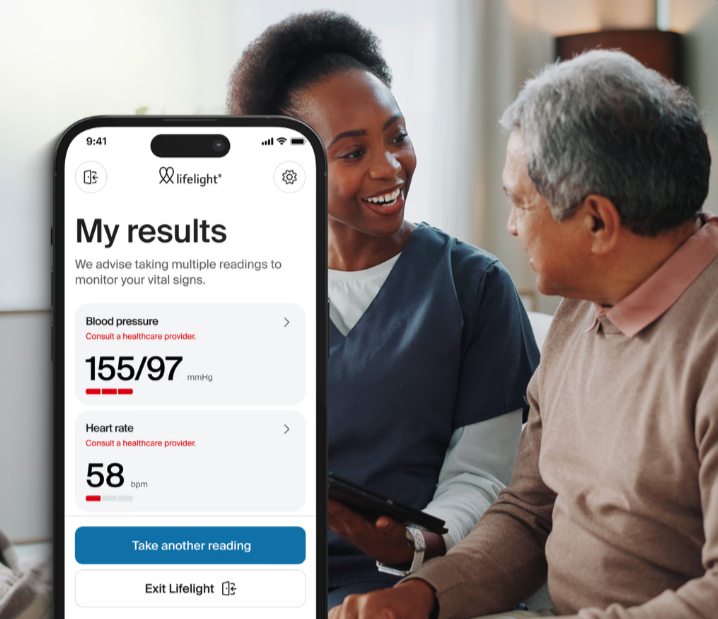
Just to explain, whilst studying for my GCSEs, I was given the fortunate opportunity of a one-week work experience placement to work for a software medical device company called Lifelight. Their innovative product uses AI to identify chronic heart disease risk, and I had a snapshot of the challenges they face and those facing healthcare providers who wish to adopt it. This fuelled my interest, and so it was the perfect opportunity to investigate this deeper as the subject of my EPQ.
The World Health Organisation (WHO) say that deaths related to heart disease have increased drastically throughout the years and continue to increase. The biggest killer is ischaemic heart disease, responsible for 16% of the world’s total deaths. Since 2000, the largest increase in deaths has been for this disease, rising by more than 2 million to 8.9 million deaths in 2019. Reducing deaths and early diagnosis of heart disease is a top priority for governments and healthcare providers, especially in developed countries. The NHS Long Term Plan, for example, identifies Chronic Heart Disease (CHD) as a clinical priority and ‘the single biggest condition where lives can be saved by the NHS over the next 10 years’.
Several research projects have been undertaken to look into the use of AI for CHD. Dr. Chin Lin, an associate professor at the School of Medicine of the National Defense Medical Center in Taipei, Taiwan, led a study showing that AI is much better than doctors at identifying early signs of potential death. Technology that outperforms professional doctors at identifying risk could be a game changer as potentially many more lives can be saved. With wide-spread use of this technology, the global heart disease mortality rate will begin to fall, and this also includes deaths from strokes and chronic obstructive pulmonary disease which, according to the figures from 2019, were the top three global killers making up 33% of total deaths. Governments and healthcare systems need this technology to reduce these death rates. As such many AI-based healthcare products are being developed to mitigate the risk of heart disease. The evolution and adoption of these by healthcare providers globally particularly accelerated during the COVID pandemic, with AI specialists saying it is already revolutionising the healthcare industry. In my project, I researched 3 such products; Lifelight, Willem and Heartflow.
The profiled products – Lifelight, Willem and HeartFlow demonstrate AI’s ability to rapidly process large amounts of data and perform repetitive tasks efficiently. It enables remote monitoring of patients’ conditions so that doctors get all the information they need regarding the person’s current state, without having to visit them constantly for check-ups. Doctors may have access to vital signs or even the ability to track any anomalies. This frees healthcare professionals to focus on critical issues and to spend more time with patients. By detecting early cardiovascular problems, AI enables timely interventions and resource allocation and it predicts future risk even without initial symptoms. The UK is a hot bed of AI innovation as the government incentivises innovators by providing research and funding opportunities and there is a large clinical workforce thanks to the NHS. In 2019 the then Health Secretary, Matt Hancock, announced the NHS AI Lab programme would receive £250m investment and 83 projects seeking to address healthcare challenges using AI have benefited from this to date.
However, the research has also shown that there are some significant barriers to rapid adoption, notably the accuracy and reliability of AI. Healthcare providers require AI solutions to comply with regulatory rules and standards to achieve the levels of accuracy and reliability required to ensure patient safety, and they must integrate and interoperate with existing healthcare technologies. To do this, Healthtech companies require clinical studies and large volumes of data, continuous development and fine tuning, and a large amount of funding, which can be difficult to sustain. Software can be far more complex to regulate than hardware, especially as it requires continuous development, and then there are different rules depending on the territory you want to sell it to. Many AI vendors are therefore reliant on government funding to create and establish their product before they can generate income. Continuous funding is important, but it is not always clear how long the government commitment will last. For example, we don’t know how a possible change in the UK government will affect the strategy and certainty of government technology funding for AI. However, with the recent new labour government they have already announced plans to create a National Data Library to support AI research and innovation in healthcare and wish to transform the NHS app to incorporate AI technologies. In addition to this, there are patient and public considerations. Patients may prefer to see a doctor face to face for check-ups instead of using AI, because at first they may not want to trust or rely on the ability of an algorithm to predict and monitor their health. Also, patients may worry that AI will take over the jobs of doctors or nurses and they may therefore be reluctant to trust these algorithms.
If I had been able to expand my research, it would have been interesting to understand how companies are combating the regulations and rules they have to comply with and how they sustain the funding they need in advance of generating revenue. Perhaps governments could support a more collaborative process whereby HealthTech vendors could share the costs and be assessed together in groups? This could be a more cost-effective approach, especially as there are no doubt a lot of products seeking to achieve similar standards.
Unlocking AI’s potential in heart disease prevention
The transformative power of AI in healthcare is clear, particularly in heart disease prevention. However, realising its full potential depends on a multifaceted approach involving:
Streamlining Regulation – Governments must prioritise streamlining regulatory processes to facilitate the integration of AI technologies into healthcare delivery, ensuring patient safety while encouraging innovation. The EU AI act has divided opinion, for example MedTech Europe raised concerns over specific obligations such as the requirement for more human insight. Experts at zuhlke, a healthcare product innovation company, argue that ‘the EU AI Act has the potential to be a facilitator for innovation’. HealthTech companies like Xim (creator of Lifelight) feel that healthcare providers and governments could be more supportive of AI solutions as they evolve to meet stringent standards. Laurence Pearce, Founder and CEO of Xim, says ‘For anyone looking at a start-up in a regulated market, you’ve got to really be prepared for the worst,’ warned Laurence. ‘Don’t underestimate how long and how expensive it can be. It is kind of out of your control due to the amount of process, as you are relying on regulators to audit your processes, audit your claims, audit your product.’
Sustaining Government Investment – Governments must continue to incentivise HealthTech companies to innovate as this is essential to sustaining the ever increasing cost of healthcare services. AI-based solutions have the potential to reduce the impact on emergency services and save lives so it’s important that governments support this market. Jon Hoeksma, a journalist for Digital Health News reported 3rd June 2024 that ‘NHS England told Digital Health News in May 2024 that the DHSC has cut the total budget for the NHS AI LAb to £139m, which includes the £14.5m programme budget for 2024/2025’. This is a £111m reduction from the original £250m announced in 2019! In the same article, Pritesh Mistry, policy fellow for digital technologies at the King’s Fund, commented ‘A cut in funding is obviously going to have implications for the progress of implementation of AI into the NHS, and one of the challenges with deploying technology into the NHS is that there is a lot of shortterm funding. I’d say the potential for AI is yet unrealised and is still being explored. Things like the NHS AI Lab can help to make sure we’ve got the right skills and expertise within parts of the system, but we still need to grow the expertise and the capability broadly within the system.’
Building Public Confidence – Fostering trust among the general population is very important. Transparency, ethical practices, and robust data privacy measures are essential to alleviate concerns and encourage widespread adoption.
Upskilling the Healthcare Workforce – Healthcare providers must invest in upskilling their workforce, equipping professionals with the necessary expertise to leverage AI effectively, interpret its outputs accurately, and integrate it seamlessly into patient care pathways.
If these key factors can be addressed, then the question I wanted to answer in my EPQ would be a statement – ‘Artificial Intelligence (AI) will play an increasingly vital role in effective heart disease prevention.
If you would like a copy of the full research paper, please contact Adam Kamruddin adam@kamruddin.co.uk.
Written by Amir Kamruddin, Project Analyst at Kamruddin Consulting, June 2026